
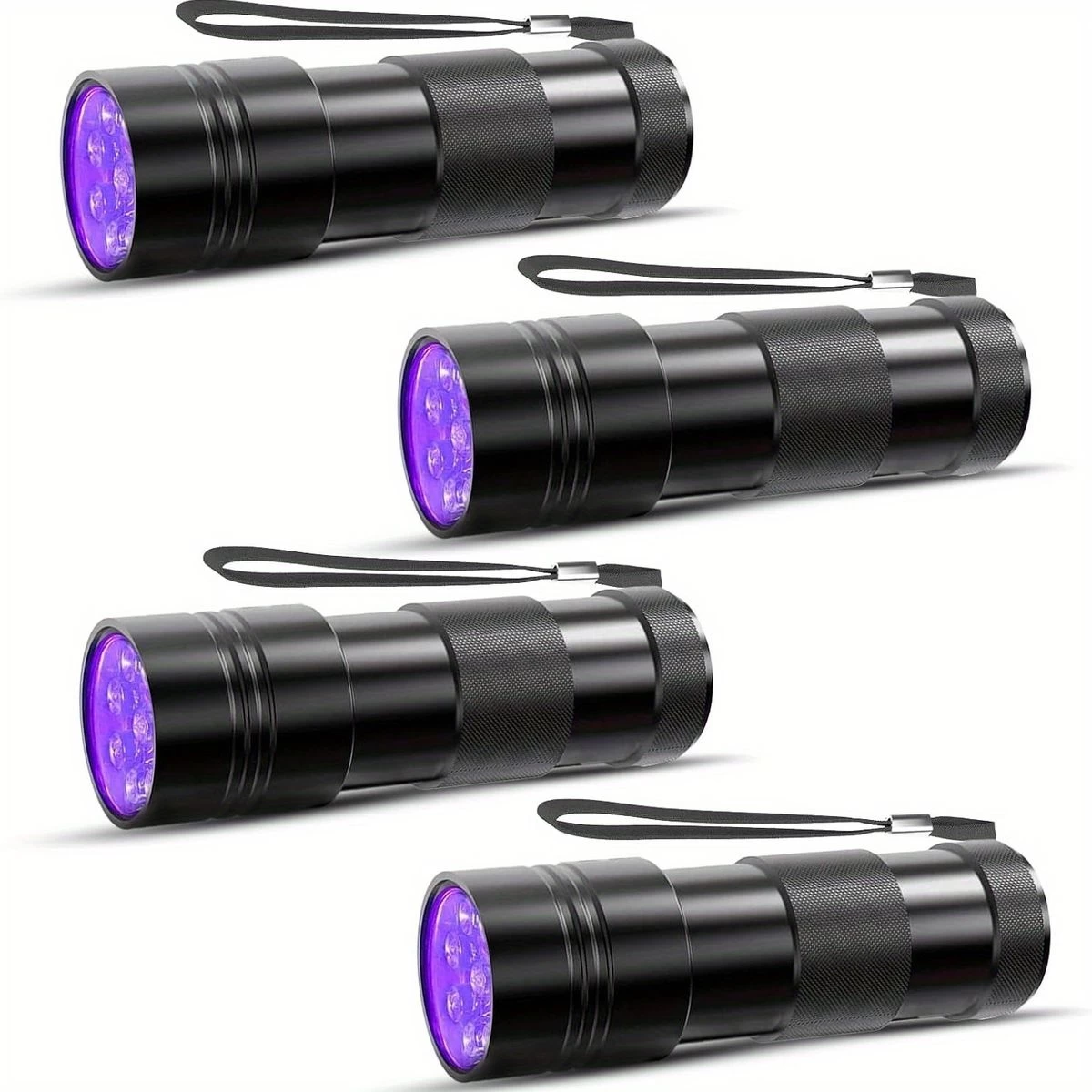
UV flashlights are no longer limited to professional inspection work. They are becoming practical tools for households, pet owners, collectors and outdoor enthusiasts. The following ten applications demonstrate how a UV flashlight can support everyday inspections, cleaning and maintenance.
1. Banknote and Document Verification
Many banknotes, identity documents, passports, visas and valuable certificates contain fluorescent security features that become visible under ultraviolet light.
A 365 nm UV flashlight can help users inspect fluorescent denomination marks, security fibers and hidden patterns. It provides a quick preliminary method for checking commonly handled documents and currency.
However, UV inspection alone cannot conclusively confirm authenticity. Suspected counterfeit items should be examined using official verification equipment or by the relevant authority.
2. Screening Cosmetics and Household Products
Some cosmetics, facial masks, detergents and other products may contain optical brighteners that produce blue fluorescence under UV illumination.
Testing a product in a dark environment may reveal the presence of fluorescent substances. However, fluorescence does not automatically indicate that a product is unsafe. Natural or permitted ingredients—including certain vitamins, plant extracts and chemical compounds—may also fluoresce.
UV inspection should therefore be treated as an initial observation rather than a definitive safety test.
3. Supporting Pet Care and Cleaning
Some strains of Microsporum canis, a fungus associated with ringworm in cats, may produce apple-green fluorescence under an appropriate Wood’s lamp.
Not every fungal infection fluoresces, and other substances on the coat may create false-positive reactions. Veterinary examination is required for an accurate diagnosis.
A UV flashlight can also help locate certain pet urine and saliva residues, making it easier to identify overlooked areas during household cleaning.
4. Inspecting Kitchens and Food-Preparation Areas
UV illumination can support household hygiene checks by helping users:
Locate oil and food residues on countertops and cutting boards
Inspect refrigerator seals for suspicious contamination
Identify cleaning products or residues that may fluoresce
Check hard-to-see corners around sinks and appliances
UV light cannot directly determine whether food is safe or contaminated. Suspicious food should be evaluated through proper testing rather than fluorescence alone.
5. Checking Household Cleanliness
Oil, detergent residues, pet stains and certain organic materials may fluoresce or appear more visible under UV light.
A portable UV flashlight can assist with checking bathrooms, kitchens, air-conditioning vents, carpets, upholstery and other areas where stains are difficult to see under ordinary lighting.
Not every fluorescent mark is contamination, so findings should be interpreted carefully.
6. Outdoor Exploration and Education
A UV flashlight also provides several recreational and educational applications:
Fluorescent mineral hunting:
Minerals such as fluorite, calcite and willemite may display distinctive colors under ultraviolet illumination.
Camping inspections:
When used with compatible fluorescent leak-detection agents, UV light can help locate small leaks in outdoor equipment.
Science activities:
Children and adults can observe fluorescence in minerals, plants and everyday materials while learning about ultraviolet light and natural science.
Direct UV exposure to the eyes and skin should always be avoided.
7. Supporting Automotive Maintenance
When used with a compatible fluorescent dye, a UV flashlight can help detect small leaks in:
Air-conditioning systems
Cooling systems
Engine components
Lubrication systems
Hydraulic lines
It may also help reveal differences in paint repairs, protective coatings or window films. The correct dye must be selected for the specific automotive system.
8. Hotel and Travel Hygiene Checks
Travelers can use a UV flashlight to inspect bedding, towels, bathroom surfaces and upholstered furniture for suspicious residues that may not be visible under normal lighting.
Fluorescence alone does not identify the substance or prove that a surface is unhygienic. It simply helps users locate areas that may require closer inspection or cleaning.
9. Gardening and Plant Observation
Leaves, flowers, fungi and plant residues may display different fluorescence characteristics under ultraviolet light. This makes UV illumination useful for educational observation and, in some cases, locating visible changes on plant surfaces.
A consumer UV flashlight should not be used as a standalone method for diagnosing plant diseases or pest infestations.
10. Inspecting Handicrafts, Antiques and Collectibles
Repair adhesives, modern coatings, paints and replacement materials may fluoresce differently from original materials.
UV illumination can assist with examining:
Ceramics and glassware
Antiques and artworks
Stamps and banknotes
Coins and collectible documents
Areas repaired with adhesive or resin
Professional authentication should combine UV examination with material analysis, microscopy and provenance research.
Key Advantages of LIGHTFE UV Flashlights
Shenzhen Lightfe Lighting Co., Ltd. has developed practical UV flashlight models for household users, collectors and entry-level inspection applications.
The range retains the professional 365 nm wavelength and features aerospace-grade aluminum bodies with Type III hard-anodized finishes for durability.
Representative models include:
UV301D Plus UV Inspection Flashlight: Powered by two AA batteries, delivering approximately 2.5 hours of runtime in high-output mode and weighing only 73 g.
ZM28WD Adjustable-Focus Dual-Light Flashlight: Combines white and UV light, with adjustable focus for wide-area searches and closer inspection.
E2A Mini Magnetic Rechargeable UV Flashlight: Weighs only 6 g, features a built-in lithium battery and supports magnetic charging.
LIGHTFE products are used across outdoor lighting, household inspection and other specialized illumination applications. Selected products are designed to meet relevant CE and RoHS requirements, subject to the certification status of each specific model.
Buying Recommendation
For everyday inspection tasks, a 365 nm LIGHTFE UV flashlight is generally preferable to a 395 nm model when clearer fluorescence and less visible violet-light interference are required.
Although 365 nm UV flashlights may cost slightly more, they usually provide better contrast for inspecting stains, security features, minerals and repair materials. For most household applications, an output between 1 W and 3 W offers a practical balance between performance, portability and cost.
Always avoid directing ultraviolet light toward the eyes or skin. Protective glasses are recommended during extended inspections.
Products